
How high does a car jack lift? Probably not as high as you want. Most floor jacks top out around 20-24 inches, and the scissor jack in your trunk barely clears 15 inches.
That car jack height limit is enough for a tire change, but it becomes a ceiling you'll hit fast for real underbody access. There are other car jack capacity limitations that bring customers to My Garage Supplies for an upgrade, too. We carry the top lifts from the most trusted brands online. You also get world-class customer service from A to Z, hassle-free financing, and free shipping.
Find the right car lift for garage today, or learn more about car jack capacity below.
Car jacks are portable, affordable, and don’t require installation. Honestly, every vehicle owner should have one in their arsenal. In fact, most cars come with one (emergency scissor jack in your trunk), and a decent floor jack is only $50-$200, depending on the car jack capacity and build quality.
Car jacks are easy to store, too. Slide it under a workbench or just keep it in a corner. No permanent commitment to your garage layout.
A jack paired with a set of stands handles a tire change on the side of the road or a quick brake pad swap in the driveway. But when you compare a car or motorcycle lift vs jack, the limitations become clear - and some vehicle owners decide it might be worth upgrading to a full-fledged car lift.
So, how high does a car jack lift?
There’s no one-size-fits-all answer on car jack height. Totally depends on the type and the usable clearance underneath depends on your vehicle's ride height.
For instance, a truck sitting at 8 inches of ground clearance gives you more working room than a sedan at 5 inches, even at the same jack extension. So, how high does a car jack lift on average? Here’s where the numbers land:
The bottom line on car jack height: even the tallest floor jack gives you about 2 feet of working clearance. That means working on your back, on a creeper, with limited reach and visibility. Enough for a quick job. Not ideal for anything that takes more than 20 minutes.
And the truth is, car jack height is just one of the limitations that lead people towards a full car lift.
Here are a few other reasons you might want to look into bringing a car lift into your garage:
None of these is a deal-breaker for occasional use or for certain vehicle types. But each limitation stacks if you're under a vehicle more than a few times a month, and the car jack height constraint is the one you'll notice first.
A garage lift can be a game-changer if the car jack height ceiling is slowing you down.
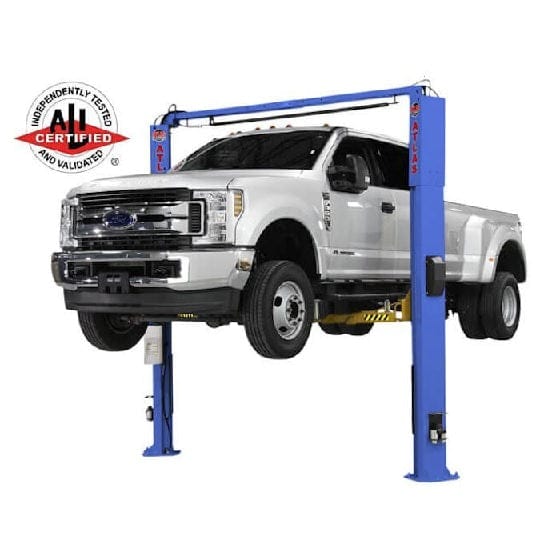
Think about a brake rotor swap. You're lying on your back when using a jack and stands, lifting one end at a time, working at arm's length with limited visibility. On the other hand, a 2-post car lift brings the vehicle to chest height in about 30 seconds. You get full access to the undercarriage, both sides, and room to move underneath without crawling.
A 4-post car lift offers drive-on convenience and can double as vehicle storage with the car parked on the runways. A car scissor lift splits the difference for tighter garages - mid-rise models deliver 24-48 inches of lift height with a compact footprint, which already beats any floor jack. And a single-post car lift is worth considering if parking density is the priority over service access.
The car lift installation process is more straightforward than most people assume. Most residential 2-post lifts need a 220V circuit, 4-6 inches of cured concrete, and 11-12 feet of ceiling height. The car lift electrical requirements aren’t super complicated either.
My Garage Supplies serves home garage owners and commercial shops alike. We carry all the most well-respected manufacturers and their most popular lift models, priced as low as possible with free shipping and hassle-free financing.
For instance, pricing starts at $1,899 for a Katool KT-H105 (10,000 lb capacity, baseplate design), and this is one of the best car lift brands for the money.
Get in touch with our team for one-on-one support. We’ll help you weigh your options and figure out if it’s even worth investing in a car lift in the first place, or if you can get by with just jacks.
As we bring this guide to a close, how high does a car jack lift? About 20-24 inches at best, and the car jack capacity on most consumer models caps out around 3-4 tons.
That's enough for tire changes and quick fixes. The car jack height is the bottleneck for anything beyond - think oil changes, exhaust work, suspension jobs, full inspections.
A full car lift for garage setups eliminates that constraint and turns every job into a standing-height, full-access operation. It might be time to rethink your workflow if you're tired of working on your back or having to bring your car to the shop for more intensive projects. Upgrade at My Garage Supplies!
BendPak vs Rotary Car Lifts | Titan vs Atlas Lift | Katool vs BendPak Car Lifts
{"one"=>"Select 2 or 3 items to compare", "other"=>"{{ count }} of 3 items selected"}