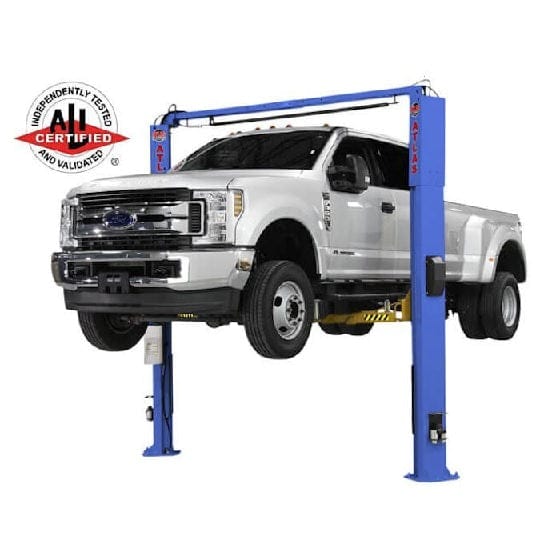

A 2-post car lift is a great addition to your home garage, empowering you to service your own vehicles and save a ton of money over the years.
But can you store a car on a 2-post lift? This is a question we get asked all the time. The answer is, it depends - although we usually don’t recommend it. A 4-post car lift is usually better suited for long-term vehicle storage. 2-post car lift storage may be fine for short-term needs, though.
We’ll cover everything you need to know about storing a car on a 2-post lift below. But whether you’re looking for a 2-post lift vs 4-post lift, My Garage Supplies carries the top brands and models at unbeatable prices.
Find the perfect car lift for garage today, or learn about storing a car on a 2-post lift below.
These types of car lifts raise a vehicle by the frame or designated lift points, leaving the wheels hanging free so you have access to everything you need for any type of service. Common jobs that call for a 2-post lift include:
Whatever the task, the vehicle is hanging from lift pads instead of resting on runways. That’s great for mechanical access, but it raises a bigger question for garage owners: can you store a car on a 2-post lift, too?
Be it a home garage or a bustling commercial shop, vehicle storage space is a precious commodity. You want to be able to service vehicles during the day and keep them out of the way overnight. So, is 2-post car lift storage safe? The answer, as with most things, is it depends!
We need to be more specific. Can you store a car on a 2-post lift while you take a lunch break? Yes.
What about overnight? Probably.
How about over the weekend? Now we’re starting to get into what we’d consider “longer-term” vehicle storage, and that’s where we need to be really careful.
A few days on the lift can still be safe in some cases, and it can be practical if you’re waiting for parts or taking the weekend off and don’t want to bother lowering the car and re-raising it when you’re ready to get back to work.
However, you do need to set your expectations and be realistic. This type of lift holds a car by four contact points. It’s plenty stable for temporary access, but not ideal for weeks or months of storage.
Safety aside, it might not be good for the vehicle. Keeping a car suspended for long stretches places a constant load on suspension pickup points and lift arms instead of the tires and runways.
Some shops will leave a vehicle up for several days without issue, but storing a car on a 2-post lift for an entire season or winter is generally outside the intended use.
Small changes in vehicle balance (fuel level, added cargo, or drivetrain weight bias) can shift load across the arms holding a car in place above the ground.
This is to say that trucks, rear-engine cars, or unevenly modified vehicles may sit differently than expected. 2-post car lift storage planning requires more than simply raising the vehicle.
Mechanical safety locks hold the vehicle once raised, not hydraulic pressure alone. Think about it like this - hydraulics move the car; the lock ladder supports the weight.
Environmental factors like temperature swings or shop vibration can affect components over extended timeframes, which is why long-term storage is not recommended.
You need to ask yourself - is storing a vehicle on a 2-post lift going to actually help you make the most of your garage space? Or will it actually cause more problems?
Yes, you’re freeing up floor space - and that can be quite valuable. However, door rails, lighting, attic access, and overhead storage all come into play. Even when column height fits the garage, the raised vehicle itself often becomes the limiting factor.
At the end of the day, we always advise our customers to choose a 4-post car lift if they anticipate storing a vehicle in the upright position.
These types of lifts support vehicles by their tires across long runways, evenly spreading weight and minimizing stress on suspension points. They have integrated locks, drip trays, and rolling jack compatibility, too, which makes them more practical for long-term parking.
Narrowing it down between the two main types of car lifts is just the first step. Here are some other factors to consider as you look to bring a vehicle lift into your garage, for service, storage, or both!
A 7,000-9,000 lb lift works well for most sedans, coupes, and half-ton pickups. Heavier trucks or commercial vans need up to 10,000-15,000 lb ratings with wider arm reach.
Wheelbase length matters just as much as weight. Long-bed trucks or extended SUVs need more runway length on 4-post lifts or greater arm extension on 2-post models for stable contact points.
Column height, overhead obstructions, and concrete thickness change what’s realistic in your garage. A clear-floor two-post might need 12' ceilings or more, but a floorplate design fits tighter garages closer to 10'.
Door tracks, lighting, and opener rails often cut into your usable height by several inches, so don’t forget to take these into consideration as you measure out what’s possible as well.
Find out your concrete’s slab thickness and PSI rating before choosing a heavy commercial lift, too. We get asked often - do 4 post lifts need to be bolted down? No, but there are strict 2-post car lift concrete guidelines. Anchoring requirements vary between brands and capacities.
There’s no need to play the guessing game choosing a vehicle lift. The experts at My Garage Supplies are here to help you narrow it down to the perfect model based on your space, budget, and what you plan on using the lift for.
We carry trusted brands like Triumph, AMGO, and iDEAL, and we walk you through real measurements, installation planning, and accessory compatibility. You’ll also get the best pricing with hassle-free financing options available. Take the next step today!
Atlas vs Rotary lift | Bendpak vs Triumph | Mayflower vs Katool
So can you store a car on a 2-post lift? It’s definitely possible in the short-term, but you need to make sure you’re following these tips on storing a car on a 2-post lift.
This should go without saying, but check the actual curb weight of the vehicle, then compare it to the lift’s rated capacity. Factor in added accessories like roof racks, toolboxes, or aftermarket bumpers.
Stay comfortably below the maximum rating so the arms, columns, and locks are carrying load within their designed range. We always encourage our customers to size their lifts with a size buffer in mind.
Arms must contact manufacturer-approved lift points with equal front-to-rear balance. Trucks with long wheelbases may need arms extended further forward/backward to keep the center of gravity between the columns. Pads should sit flat with full rubber contact, not angled or resting on edges.
Raise the vehicle slightly above a lock position, then lower it until the carriage rests fully on the mechanical locks. Leaving a vehicle suspended on hydraulic pressure alone is unnecessarily risky.
Do a quick visual check if you stored a raised vehicle overnight or through a short service window before starting work again. Look out for pads that shifted off the factory lift points or rubber adapters that compressed unevenly after the first lift cycle.
It’s unlikely the car will move on its own. But trucks with soft bushings or older unibody cars may settle a little once the weight transfers onto the arms. You’d rather be safe than sorry with 2-post car lift storage - verify pad contact again before raising to full height.
In closing, can you store a car on a 2-post lift? The answer isn’t black and white. But in general, storing a car on a 2-post lift isn’t safe long-term. It’s fine for a lunch break, overnight, or perhaps even a weekend in some cases. Other than that, though, you’ll want a 4-post lift for storage.
Use our tips on 2-post car lift storage for safely keeping vehicles at a raised height for short periods of time. You can also connect with our customer service team if you have more specific questions or are ready to upgrade to a superior car lift. Contact My Garage supplies today!
{"one"=>"Select 2 or 3 items to compare", "other"=>"{{ count }} of 3 items selected"}